Best Pickleball Ball Machines 2026
As pickleball explodes in popularity, dedicated ball machines are becoming essential training tools. We've tested the top pickleball-specific machines to help you find the perfect practice partner.
Top Pickleball Ball Machines
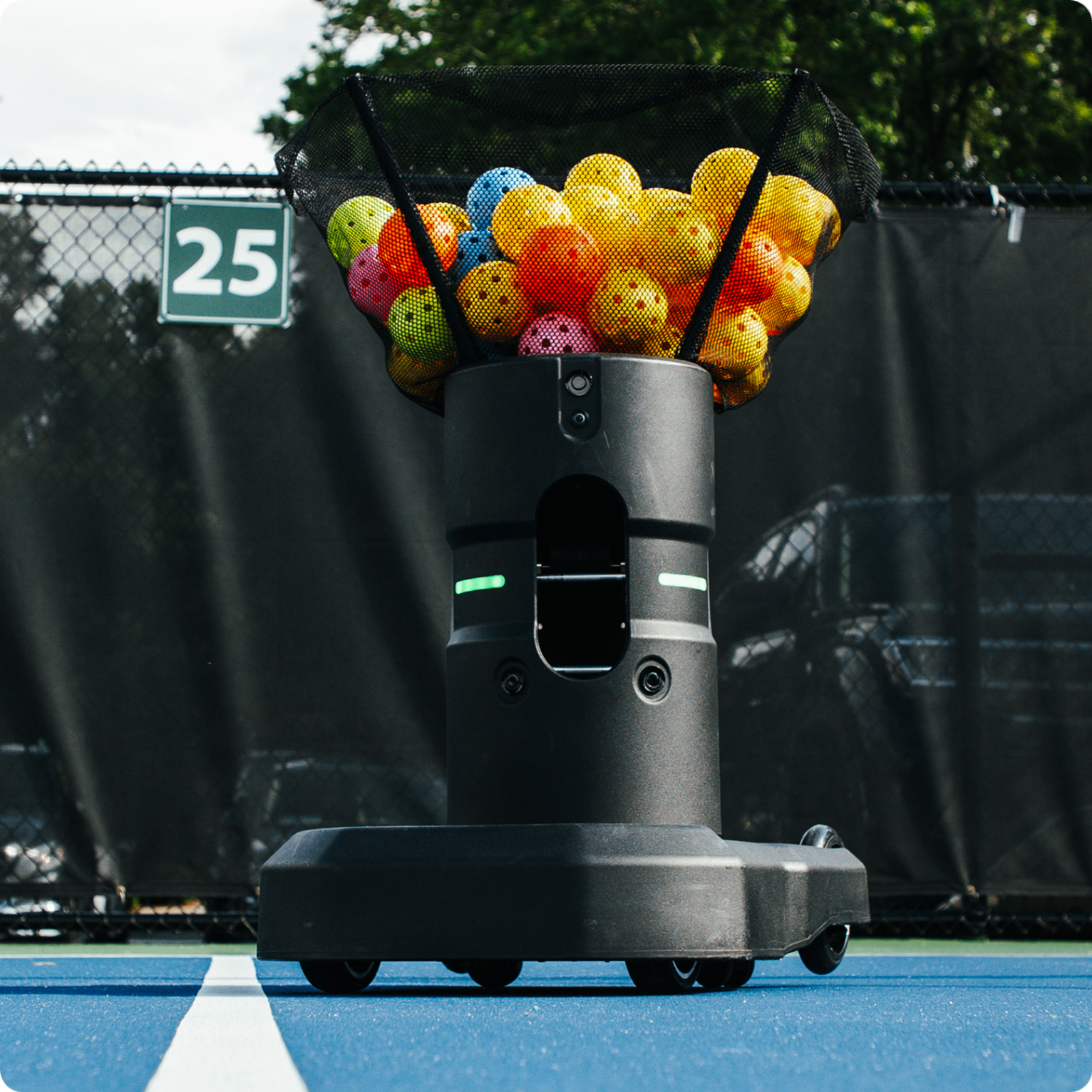
Tennibot Pickleball Partner V2
- 250-ball capacity
- 4K AI tracking with autonomous movement
- App-based drill creation
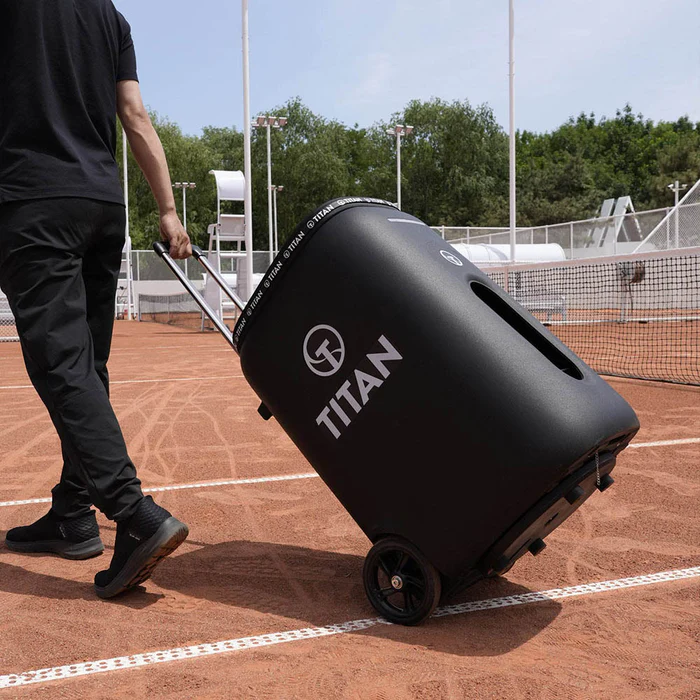
Titan One
- Large ball capacity
- Strong feed consistency
- Designed for extended sessions
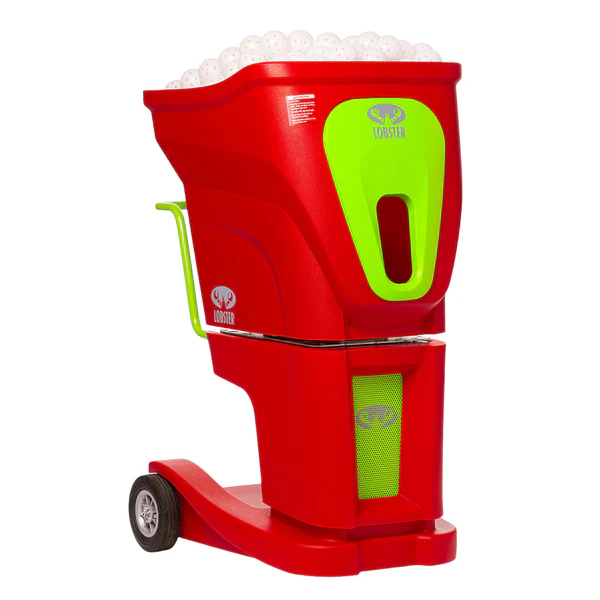
Pickle Phenom
- Extremely large 185-ball capacity
- Fully random horizontal + vertical oscillation
- Pre-loaded drills for match-like training
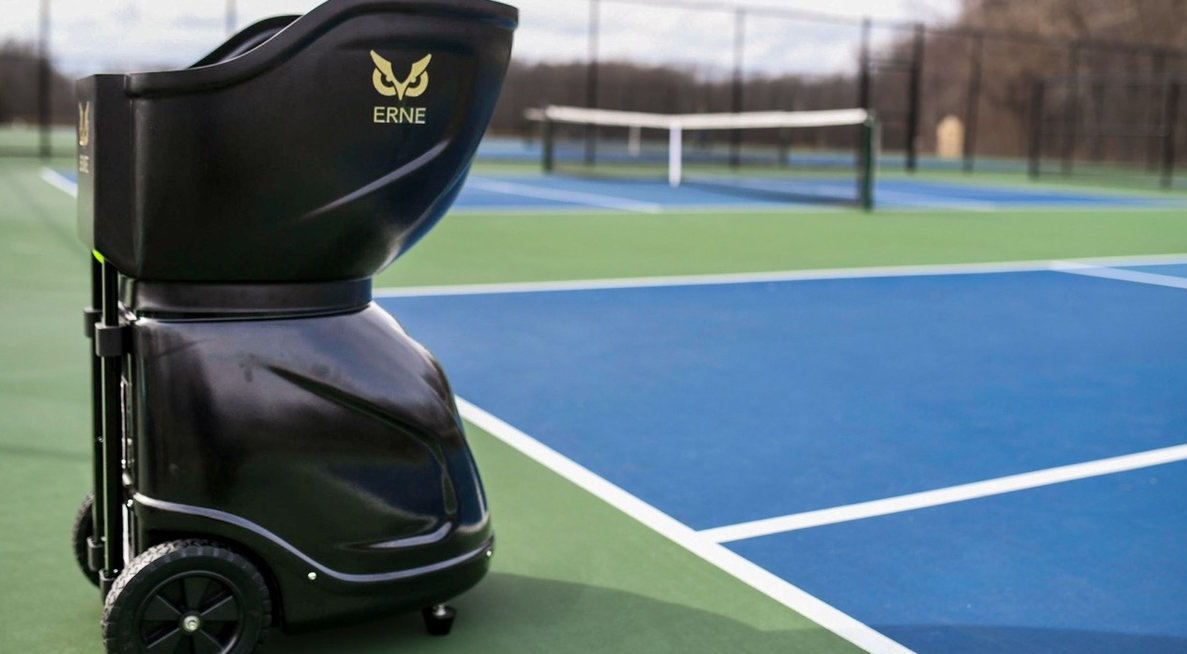
Erne
- Consistent feed quality
- Remote control operation
- Good price-performance balance
Looking for Budget Options?
Check out our top picks for affordable machines under $1,500 that deliver great value.
Pickleball Ball Machine Comparison
Side-by-side specs for every machine we tested
| Machine | Our Rating | Price | Ball Capacity | Speed Range | Spin | Oscillation | App Control | Power | Weight |
|---|---|---|---|---|---|---|---|---|---|
| Tennibot Pickleball Partner V2 | 9.4 | $2,245 | 250 | Up to 65 mph | Topspin, Backspin | AI Programmable | Yes (iOS/Android) | Battery | 35.4 lbs |
| Titan One | 8.8 | $2,299 | 160 | Up to 60 mph | Topspin, Backspin | Horizontal, Vertical | No (Remote) | Battery | 55 lbs |
| Pickle Phenom | 8.5 | $3,899 | 185 | Up to 55 mph | Topspin, Backspin | Full Random (H+V) | No (Remote) | AC Powered | 75 lbs |
| Erne | 8 | $1,999 | 120 | Up to 50 mph | Flat, Topspin | Horizontal | No (Remote) | Battery | 44 lbs |
In-Depth Look at Each Machine
What our testing revealed about each pickleball ball machine
Tennibot Pickleball Partner V2 — Editor's Choice (9.4/10)
The Pickleball Partner V2 brings the same AI-driven technology that made the tennis version our top pick, adapted specifically for the demands of pickleball. The machine uses 4K cameras and 3D object tracking to detect your position on the court and adjusts shot placement in real time, which is a game-changer for a sport where kitchen line positioning and quick transitions are everything.
Where it excels most is in simulating realistic rally patterns. You can program sequences that alternate between deep drives and soft dinks, forcing you to practice the transitions that win points in actual games. The app lets you build custom drills or choose from a library, and the AI adapts difficulty based on how you're performing. At 35.4 lbs, it's significantly lighter than most competitors in this price range. The massive 250-ball capacity means longer uninterrupted sessions.
The one caveat is that pickleball-specific machines are a newer category, and the Partner V2's drill library is still growing compared to its tennis counterpart. That said, the custom drill builder gives you full control, and firmware updates continue to add new features.
Titan One (8.8/10)
The Titan One is built like a tank. With a 160-ball capacity and a sturdy, wide-base design, this machine is clearly aimed at clubs and serious players who want long, uninterrupted practice sessions. The feed consistency was among the best we tested, with tight groupings even at higher speeds.
Oscillation covers both horizontal and vertical patterns, giving you solid court coverage. The speed tops out around 60 mph, which is more than enough for even fast-paced pickleball drives. The included remote control handles all adjustments without needing to walk back to the machine.
The downsides are size and weight. At 55 lbs with no app connectivity, the Titan One is not the machine you want if you're regularly loading it in and out of your car. It's best suited for a permanent or semi-permanent setup at a club or home court. If that's your situation, the combination of capacity, consistency, and durability makes it a strong choice.
Pickle Phenom — Best AC-Powered (8.5/10)
The Pickle Phenom is the most powerful dedicated pickleball machine we've tested, and it's also the most expensive. Its 185-ball hopper is the largest in the category, and the fully random oscillation (both horizontal and vertical simultaneously) creates genuinely unpredictable rally patterns that push your reaction time and court coverage.
Being AC-powered means unlimited session time as long as you're near an outlet, which makes it ideal for club installations or courts with accessible power. The pre-loaded drills are well-designed for common pickleball scenarios: dink rallies, drive defense, third-shot drop practice, and transition zone work.
At $3,899 and 75 lbs, the Phenom is a significant investment in both money and logistics. This is not a grab-and-go machine. It's built for dedicated pickleball facilities and players who want the absolute maximum in capacity and drill variety. If portability matters to you at all, look at the other options on this list.
Erne (8.0/10)
The Erne occupies a solid middle ground in the pickleball machine market. At $1,999, it's the most affordable option in our top picks, and it delivers reliable, consistent feeds that get the job done for regular practice sessions.
Feed quality was good in our testing, with consistent speed and placement across long sessions. The remote control is straightforward, and the machine is easy to operate right out of the box. Horizontal oscillation covers a reasonable range of the court, though it lacks the vertical variation that higher-end machines offer.
At 44 lbs, it's portable enough for regular transport, though not as light as the Tennibot at 35.4 lbs. The 120-ball capacity is adequate for most practice sessions. The Erne is a practical choice for players who want a reliable machine without overpaying for AI features or massive capacity they may not need.
How We Select and Test Pickleball Ball Machines
Our review process centers on hands-on testing with real players on pickleball courts. We evaluate each machine based on four key factors: low-speed accuracy, feed consistency, drill versatility, and ease of use.
We do not accept affiliate commissions from manufacturers. All machines we test are commercially available and actively shipping. We do not include concept models, prototypes, or crowdfunding-only products like those on Kickstarter.
What to Look for in a Pickleball Ball Machine
When choosing a pickleball ball machine, consider these key factors:
- Low-Speed Accuracy: Essential for dink and kitchen practice
- Compact Size: Easier to transport and store
- Ball Compatibility: Works with outdoor and indoor pickleballs
- Drill Modes: Pre-programmed patterns for common scenarios
- Portability: Lightweight for moving between courts
- Feed Consistency: Repeatable shots for technique training
Pickleball Ball Machine Buying Guide
What to know before you invest
Why Pickleball Needs Its Own Machine
You cannot reliably use a tennis ball machine for pickleball. The balls are completely different in size, weight, and material. Tennis balls are pressurized felt-covered rubber; pickleballs are lightweight perforated plastic. A machine calibrated for one will not accurately feed the other. The spin mechanisms, trajectory calculations, and feed wheels are all optimized for a specific ball type. Always buy a machine designed specifically for pickleball.
Kitchen Drills: The Feature That Matters Most
The kitchen (non-volley zone) is where pickleball points are won and lost. A ball machine that can consistently deliver soft, low balls to the kitchen line is more valuable than one that can blast drives at 60 mph. When evaluating machines, pay close attention to low-speed accuracy and the ability to simulate dink rallies. Machines with programmable drills that alternate between kitchen dinks and deep drives are especially useful for practicing the transition game.
Indoor vs. Outdoor Play
Most pickleball ball machines work for both indoor and outdoor play, but there are some considerations. Outdoor pickleballs have smaller holes and are slightly heavier than indoor balls, which affects feed trajectory. Make sure the machine you choose is compatible with the ball type you use most. Outdoor play also exposes the machine to wind, sun, and temperature extremes, so look for durable construction and consider a protective cover if the machine will be stored outside.
Pickleball Ball Machine FAQ
Answers to common pickleball machine questions