Best Tennis Ball Machines 2026
After 200+ hours of testing across 15 different models, our team of certified coaches and tournament players has identified the best tennis ball machines for every budget and skill level.
Top 3 Tennis Ball Machines
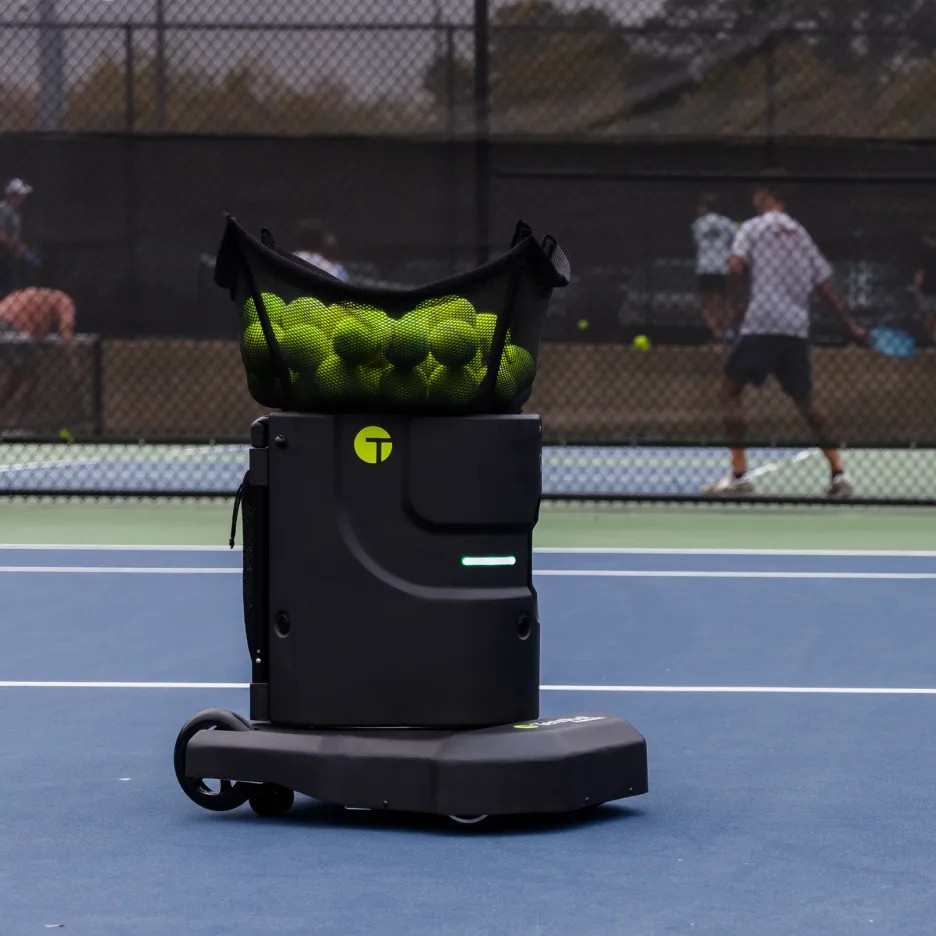
Tennibot Partner V2
- 4K AI-powered adaptive shot variation
- Intuitive app-based control
- Ultra-portable at 35.4 lbs
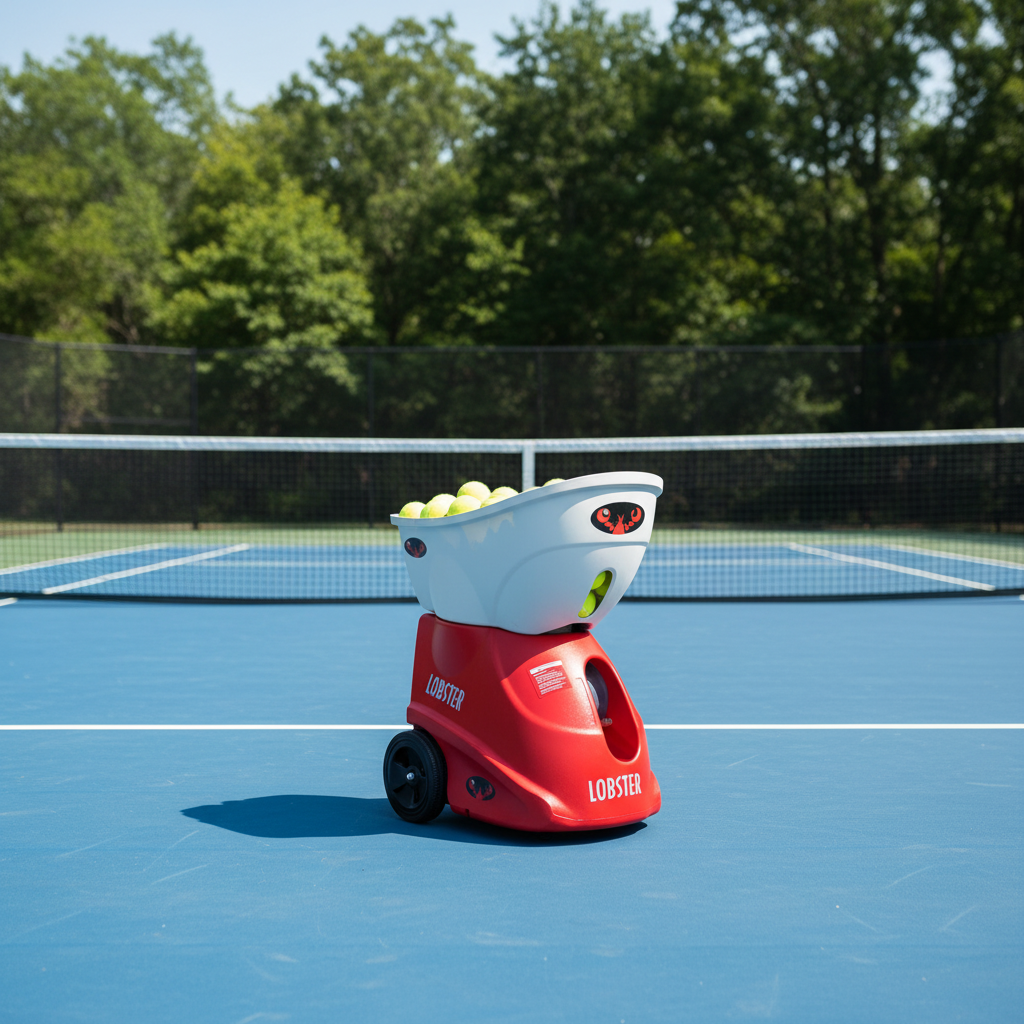
Lobster Elite Three
- Elite oscillation system
- App control
- 150-ball capacity
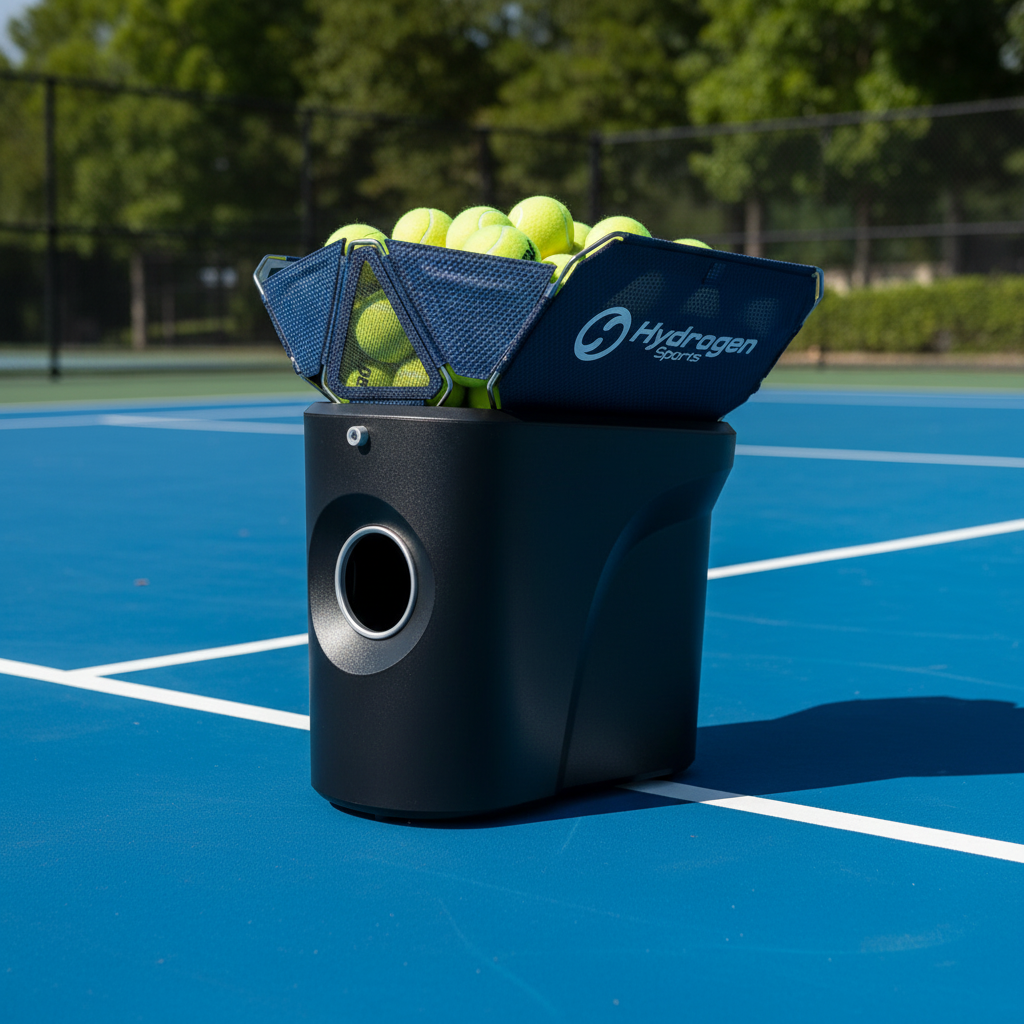
Proton by Hydrogen
- Advanced spin technology
- Precision ball placement
- Professional-grade build
Looking for Budget Options?
Check out our top picks for affordable machines under $1,500 that deliver great value.
Tennis Ball Machine Comparison
A side-by-side look at the top tennis ball machines we tested
| Machine | Our Rating | Price | Ball Capacity | Speed Range | Spin | Oscillation | App Control | Power | Weight |
|---|---|---|---|---|---|---|---|---|---|
| Tennibot Partner V2 | 9.4 | $2,245 | 140 | Up to 70 mph | Topspin, Backspin, Flat | AI Programmable | Yes (iOS/Android) | Battery | 35.4 lbs |
| Lobster Elite Three | 8.6 | $2,099 | 150 | 10-80 mph | Topspin, Backspin | Triple (H/V/Random) | No (Remote only) | Battery | 42 lbs |
| Proton by Hydrogen | 8.2 | $1,695 | 120 | 10-75 mph | Topspin, Backspin, Sidespin | Programmable | Yes (iOS/Android) | Battery | 35 lbs |
In-Depth Look at Each Machine
Detailed breakdowns based on our hands-on testing
Tennibot Partner V2 — Editor's Choice (9.4/10)
The Tennibot Partner V2 is the most technologically advanced consumer tennis ball machine we've tested. It uses 4K cameras and 3D object tracking to detect your position on the court in real time, adjusting shot placement dynamically based on where you are and how you're moving. This means every drill feels more like playing against a real opponent than hitting against a static machine.
Setup is refreshingly simple. The machine weighs 35.4 lbs, charges via a standard outlet in just 90 minutes, and connects to your phone through a clean, responsive app. You can choose from pre-built drills or create your own custom sequences with precise control over speed, spin, direction, and feed interval. The app also tracks your session data over time, which is a nice touch for players who want to measure improvement.
Where the Partner V2 really separates itself is in on-court movement. Unlike traditional machines that sit in one fixed position, the Partner V2 can reposition itself during a drill, simulating how a real opponent would move and change shot angles. For solo players who want genuine match-like simulation, nothing else in this price range comes close.
The main trade-off is that the machine is entirely app-controlled. There are no physical dials or buttons on the unit, so if you're not comfortable with smartphone apps, there will be a learning curve. Battery life runs about 4-5 hours depending on usage intensity.
Price
$2,245
Capacity
140 balls
Weight
35.4 lbs
Battery
4-5 hours
Lobster Elite Three — Best Traditional Machine (8.6/10)
Lobster has been making ball machines longer than most companies in this space, and the Elite Three shows that experience. This is a no-nonsense, well-built machine that does exactly what a traditional ball machine should do: deliver consistent, reliable feeds with good speed and spin variety.
The standout feature is the triple oscillation system, which combines horizontal, vertical, and random patterns. This gives you surprisingly varied shot placement for a non-AI machine. You can practice cross-court rallies, baseline-to-net transitions, and random shot patterns without touching the settings mid-drill. The included remote control lets you adjust speed, spin, and feed rate from anywhere on the court.
Build quality is excellent. The Elite Three feels sturdy and durable, and Lobster's track record for longevity backs that up. The 150-ball hopper is one of the largest in its class, which means fewer interruptions to reload during a session.
The trade-offs are weight and tech. At 42 lbs, it's noticeably heavier than newer machines, and there's no app, no AI, and no adaptive drill capability. If you want a reliable workhorse that does the fundamentals really well, the Elite Three delivers. If you want the machine to think for you, look elsewhere.
Price
$2,099
Capacity
150 balls
Weight
42 lbs
Battery
4-8 hours
Proton by Hydrogen — Best Lightweight Option (8.2/10)
The Proton strikes an interesting balance between modern app connectivity and a more traditional ball machine experience. At 35 lbs, it's one of the lighter full-featured machines we've tested, which makes a real difference when you're loading it in and out of your car multiple times a week.
The app is well-designed and lets you create custom drills with individual shot settings for speed, spin type, and placement. Hydrogen includes sidespin capability in addition to topspin and backspin, which is relatively rare in this price range and adds useful variety to practice sessions. The programmable oscillation patterns are solid, though not as dynamically varied as AI-driven systems.
Feed consistency was good in our testing, with tight shot groupings across extended sessions. Speed tops out around 75 mph, which is lower than some competitors but sufficient for the vast majority of recreational and club players. The ball capacity of 120 is adequate, though you will notice the difference compared to 150-ball hoppers in longer sessions.
At $1,695, the Proton offers genuine value. You get app control, good spin variety, and strong portability at a price point several hundred dollars below the competition. It's a smart pick for players who want modern features without paying the premium for AI.
Price
$1,695
Capacity
120 balls
Weight
35 lbs
Battery
3-5 hours
How We Select and Test Tennis Ball Machines
Our review process is built around hands-on testing with real players on actual tennis courts. Each machine is evaluated across four key areas: trajectory accuracy, spin consistency, oscillation patterns, and how effectively it prepares players for real match play.
We do not accept affiliate commissions from manufacturers. All machines we test are commercially available and actively shipping. We do not include concept models, prototypes, or crowdfunding-only products like those on Kickstarter.
What to Look for in a Tennis Ball Machine
When choosing a tennis ball machine, consider these key factors:
- Ball Capacity: Larger hoppers mean longer practice sessions
- Speed Range: Look for 10-80 mph for versatile training
- Spin Capability: Topspin and backspin for realistic shots
- Oscillation: Random vs. preset patterns for varied drills
- Portability: Weight and wheel quality for easy transport
- Remote Control: Smartphone apps offer the most flexibility
Tennis Ball Machine Buying Guide
Everything you need to know before making a decision
How Much Should You Spend?
The tennis ball machine market breaks into three clear tiers. Entry-level machines ($400 to $800) cover the basics: a single speed setting or narrow range, limited elevation control, and simple on/off operation. These work for beginners who just need consistent ball feeds for stroke repetition. Mid-range machines ($800 to $1,500) add programmable drills, oscillation, spin control, and often include remote controls. This is the sweet spot for most club players. Premium machines ($1,500 to $3,500) bring app connectivity, AI-driven shot placement, camera tracking, and in some cases autonomous movement. These are ideal for serious competitive players, coaches, and clubs.
Battery vs. AC Power
Most modern ball machines run on rechargeable batteries, typically lasting 2 to 8 hours per charge. Battery power gives you the freedom to set up anywhere on the court without worrying about outlet access or extension cords. However, if you primarily practice at a facility with accessible power, an AC adapter option extends your session time indefinitely. Some machines offer both battery and AC options. If you practice more than three times per week, look for a machine with at least 4 hours of battery life or an AC adapter.
Traditional vs. AI-Powered
Traditional ball machines use mechanical oscillation and preset patterns to vary shot placement. They're proven, reliable, and generally less expensive. AI-powered machines use cameras, sensors, or tracking systems to detect where you are on the court and adapt their shots accordingly. The experience is dramatically more realistic, but AI machines cost more and typically require app connectivity to unlock their full potential. If your primary goal is stroke repetition and rhythm training, a traditional machine will serve you well. If you want match-like simulation and adaptive difficulty, invest in AI.
Portability Matters More Than You Think
Unless your ball machine lives permanently at a single court, you will be transporting it regularly. Weight, wheel quality, and form factor matter more than most buyers expect. A 45 lb machine with small plastic wheels is a very different experience than a 35 lb machine with pneumatic tires. Consider how far you carry or roll the machine from your car to the court, whether you need to lift it over curbs or through gates, and whether you have dedicated storage or need to take it home each time.
Tennis Ball Machine FAQ
Common questions about tennis ball machines